
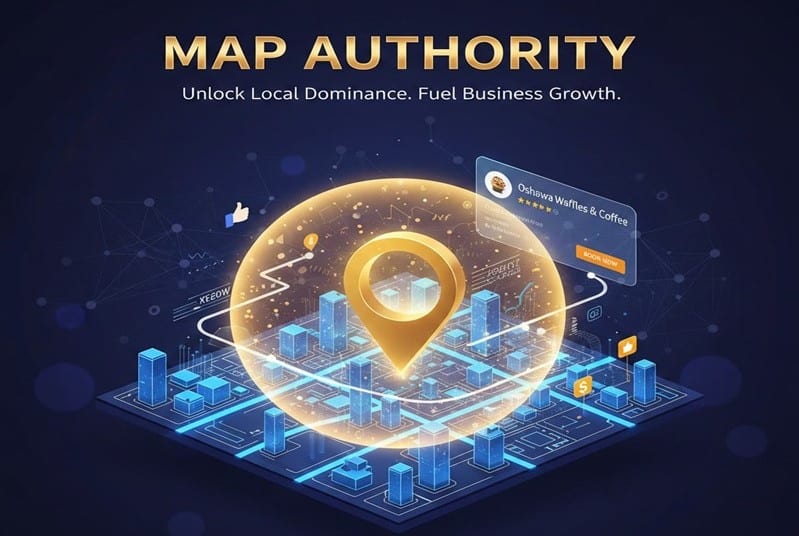
In 2026, the local search landscape has undergone a tectonic shift. We have moved past the era where simply “having a pin on a map” was enough. Today, the “Local Pack” is governed by Map Authority a complex, AI-driven trust score that determines whether your business is visible to a human or an AI agent.
If your business lacks Map Authority, you aren’t just losing clicks; you are becoming invisible to the Agentic Web. This guide provides the strategic blueprint to claim your territory and dominate your local market.
What is Map Authority? (Defining the Asset)
Map Authority is the digital “weight” your business carries within global mapping ecosystems (Google Maps, Apple Maps, and Bing). Unlike traditional SEO, which focuses on website backlinks, Map Authority is an Entity-Based Metric.
It is calculated using three primary signals:
- Prominence: How well-known is your business in the real world?
- Relevance: How well does your “Entity Data” match the user’s specific intent?
- Proximity: The physical distance, now augmented by “Signal Velocity” (how many people are moving toward your location).
In the age of Generative Engine Optimization (GEO), Map Authority is the “Knowledge Graph” data point that tells an AI like Gemini: “This business is the most verified and trusted solution for this specific local query.”
Why Map Authority is the Most Critical KPI in 2026
Local search is no longer a discovery tool; it is a transaction tool. The data from early 2026 is clear:
- The Conversion Surge: 76% of local mobile searches result in a physical visit within 24 hours.
- The Trust Gap: 88% of consumers trust online map reviews as much as personal recommendations.
- The AI Gatekeeper: 60% of local discovery now happens via AI Overviews. If the AI doesn’t “see” your Map Authority, you are excluded from the summary.
High Map Authority acts as a Discovery Friction reducer. When your authority is high, Google places you in the “Golden Triangle” of the map pack, where 70% of all local clicks occur.
The Role of Google Business Profile (GBP) in 2026
Your GBP is the “Single Source of Truth” for your business. In 2026, Google has introduced Active Entity Monitoring. This means a static profile is a dead profile.
Key GBP Optimization Pillars:
- NAP+ Consistency: Your Name, Address, and Phone must be identical across the web. Even a missing suite number erodes your Map Authority score.
- Video-First Verification: Google now prioritizes profiles with verified video tours of the premises. This increases trust scores by up to 41%.
Sentiment-Rich Reviews: It’s no longer about the number of stars. AI now parses the words in your reviews. If customers mention specific services (e.g., “best organic latte in Oshawa”), your authority for those specific keywords skyrockets.
Technical DNA: SEO, VSO, and LLM Integration
To win in 2026, your website and your map profile must speak the same language: Structured Data.
Vector Search Optimization (VSO)
AI models use “vectors” (mathematical representations of concepts) to understand your business. If your website mentions “Expert Plumbing” and your Map Profile shows “Emergency Pipe Repair,” the vectors align, creating a stronger “Entity Signal.”
The Rank Math Pro Advantage
Rank Math Pro’s Local SEO module is the tactical engine for this alignment. By using the Local Business Schema, you are essentially “feeding” the Google Knowledge Graph.
- Geo-JSON: Provides the precise coordinates of your front door.
OpeningHours Schema: Ensures AI agents don’t recommend you when you are closed, preventing “Customer Churn.”
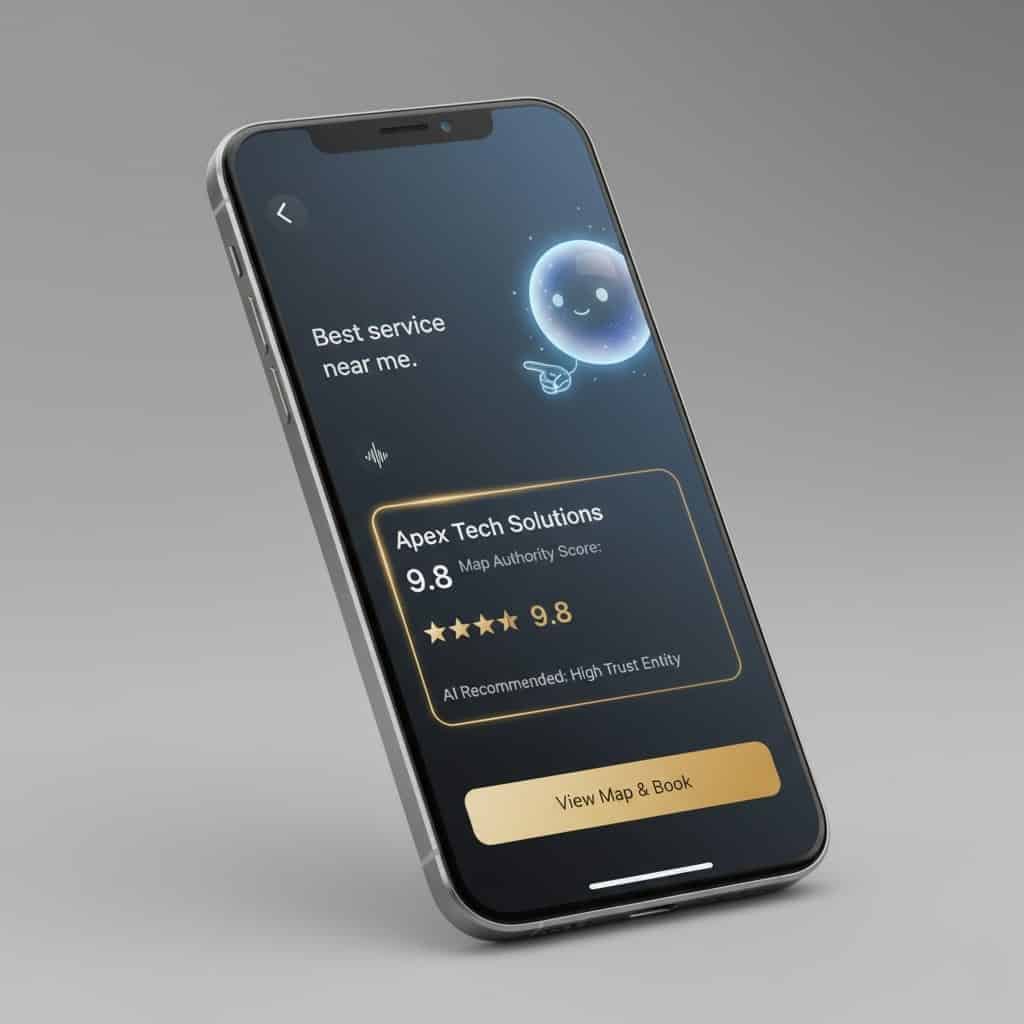
The E-E-A-T Connection (Experience, Expertise, Authoritativeness, Trustworthiness)
Map Authority is the physical manifestation of E-E-A-T.
- Experience: Demonstrated through “Owner Responses” to reviews.
- Expertise: Shown through high-resolution photos of your work/products.
- Authoritativeness: Built through local citations (mentions on local news, blogs, and directories).
Trustworthiness: Secured through your “Verified” status and consistent data.
7 Actionable Steps to Build Your Map Authority Today
- Claim and Shield your GBP: Verify your profile and use 2FA to prevent “Listing Hijacking.”
- Deploy Local Schema: Use Rank Math Pro to install LocalBusiness and Service-specific Schema.
- Audit Your NAP: Use tools like Moz Local or BrightLocal to fix every single inconsistent address online.
- Incentivize “Keyword-Rich” Reviews: Ask customers to mention the specific service they received in their review.
- Publish Weekly “Local Updates”: Use the “Posts” feature in GBP to share local news and offers.
- Optimize for Voice Search: Ensure your content answers “Who,” “What,” “Where,” and “How” questions.
- Monitor Your “Geo-Grid”: Use a tool to see how your ranking changes street-by-street.
CONCLUSION: The Future is Local
Map Authority is not a “set and forget” marketing tactic. It is a foundational business asset. As we move deeper into 2026, the gap between “Map-Optimized” businesses and the “Invisible” will only widen. By leveraging tools like Rank Math Pro and prioritizing your Entity Data, you are building a shield against competition and a magnet for local customers.
AI Search FAQ
Q1: How long does it take to build Map Authority?
A: While foundational signals can be set in 30 days, true dominance usually takes 3-6 months of consistent review generation and citation building.
Q2: Does my website speed affect my Map ranking?
A: Yes. Google’s “Core Web Vitals” are now a secondary signal for Map Authority. A slow site suggests a poor customer experience.
Q3: Can I have Map Authority without a physical office?
A: Yes, via “Service Area Business” (SAB) profiles, but you must be extra diligent with Local Schema to prove your relevance in those areas.
Q4: Why did my ranking drop suddenly?
A: This is often due to “NAP Drift” (new inconsistent data appearing) or a competitor gaining a surge in high-quality, local reviews.
Q5: Is Rank Math Pro worth it for local businesses?
A: Absolutely. It is the only tool that seamlessly bridges the gap between your website’s content and the technical Schema requirements of the 2026 Knowledge Graph.
0 Comments