
Hook: Your Marketing Report Looks Good. But Is Your Business Growing?
Your website traffic is increasing. Social media posts are getting attention. Your advertising dashboard shows clicks, and your monthly marketing report is full of activity.
Yet the number of new customers has barely changed.
This is a common issue for a lot of small and medium-sized enterprises (SMBs). Although marketing activity is being measured, it is still unknown how much it contributes to sales.
Which campaign generated a qualified enquiry? Which enquiries became paying customers? How many leads were never contacted? And which marketing expenses are producing enough return to justify continued investment?
Business leaders must make decisions based on incomplete reports, speculation, or whichever statistic seems most promising in the absence of definitive answers.
The solution is not simply to collect more data. It is to connect marketing activity to leads, sales outcomes, and revenue.
This guide explains how Toronto SMBs can build a practical measurement system that connects marketing, CRM records, follow-ups, and business results.
Executive Summary
Website traffic, impressions, and social media interaction should not be the only metrics used to assess marketing performance. These metrics can indicate awareness and interest, but they do not automatically demonstrate business growth.
A more useful system connects five stages:
Marketing activity → Enquiries → Qualified leads → Sales → Revenue
To make this work, businesses need consistent lead records, clear campaign tracking, reliable follow-up processes, and agreed definitions for success. A CRM can help maintain those records, while analytics and automation can reduce manual reporting and reveal missed opportunities.
The objective is not to credit every sale to one advertisement or promise that every marketing dollar will generate a predictable return. It is to make performance more transparent, improve decision-making, and identify where the business can act.
Purpose and Scope
This article is for Toronto and Greater Toronto Area business owners, managers, and marketing teams that want clearer answers about marketing effectiveness.
It covers:
- The difference between marketing activity and commercial results.
- How to connect website enquiries and campaigns to CRM records.
- Which KPIs matter at each stage of the customer journey.
- How automation and reporting can improve follow-up and accountability.
- How to use the results to make better spending decisions.
The focus is on practical measurement for SMBs, not enterprise-level analytics infrastructure or complicated attribution models.
Why Marketing Reports Can Be Misleading
Marketing platforms are designed to provide various performance metrics. Website analytics programs measure visits and user behavior, while advertising platforms report on campaign activity. Engagement is monitored through social networks, and customer interactions, along with potential sales opportunities, are recorded in a Customer Relationship Management (CRM) system.
Although each source can be useful, none of them, by itself, provides a complete picture of the company. Consider a fictional Toronto service business that receives 100 enquiries in a month. Its marketing report looks promising, but the sales team contacts only 65 people. Of those contacted, 20 become qualified opportunities, and five eventually become customers.
The figures reveal several different questions:
- Are marketing campaigns attracting the right people?
- Why were 35 enquiries not contacted?
- Are the 20 qualified opportunities progressing?
- What is the value of the five new customers?
- Would better follow-up improve results without increasing advertising spend?
The example is illustrative, not a benchmark. Its goal is to demonstrate how operational issues can be hidden by a single traffic or lead total.
Activity is not the same as outcome
Marketing activity metrics include:
- Website sessions and page views.
- Search impressions and clicks.
- Social media reach and engagement.
- Advertising spend and click-through rate.
Business outcome metrics include:
- Qualified enquiries.
- Sales opportunities.
- New customers.
- Revenue generated.
- Customer acquisition cost.
- Gross profit and return on marketing investment.
Both categories matter. Awareness metrics help explain whether people are discovering the business, while outcome metrics show whether that activity is contributing to commercial results.
Connect Marketing Activity to the Customer Journey
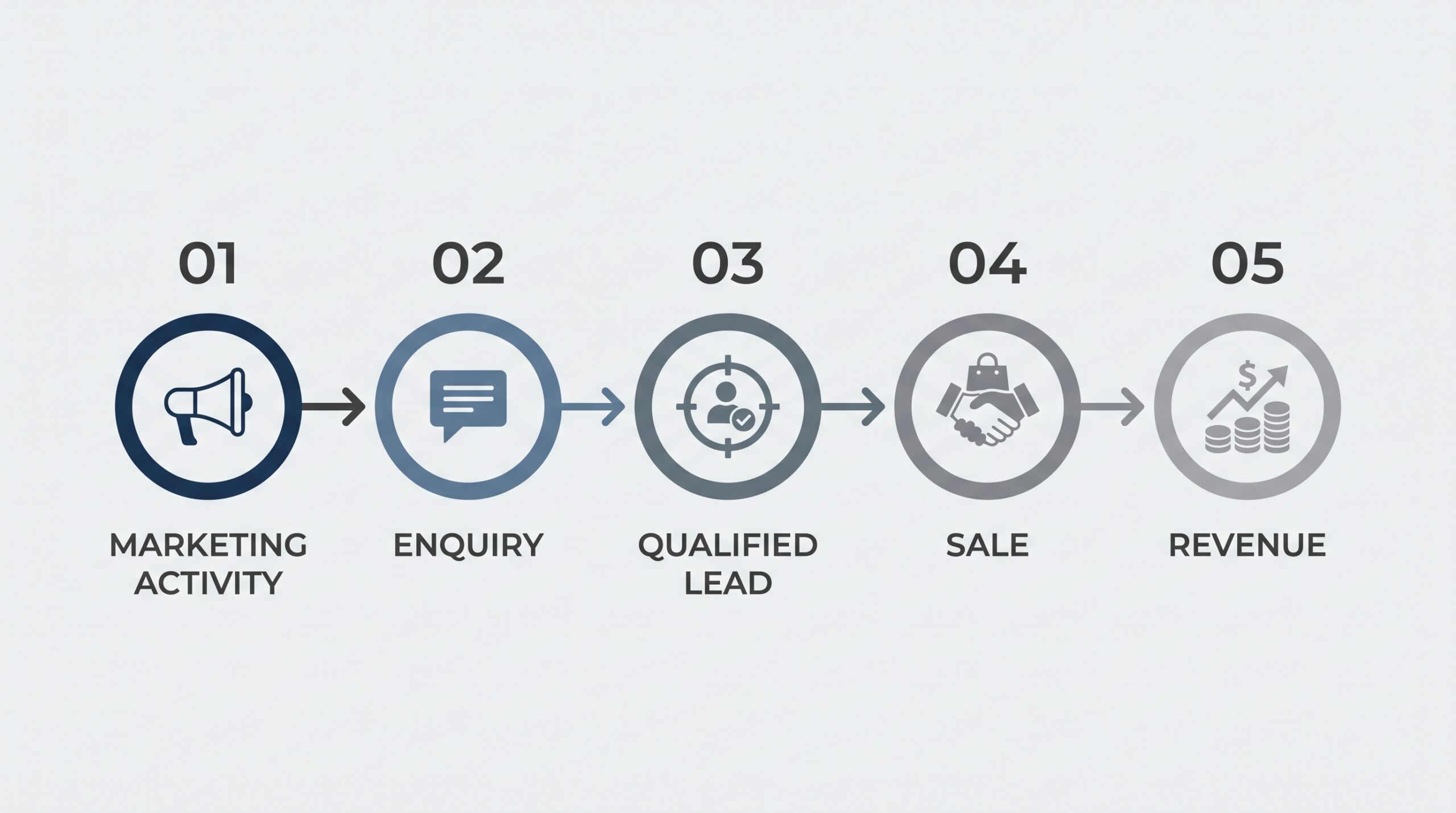
A useful measurement system follows the customer from the first identifiable interaction through to the final business outcome.
Stage 1: Discovery
Potential customers find the business through search, social media, advertising, referrals, email, or other channels.
Track relevant indicators such as:
- Search impressions and organic clicks.
- Website visits by source and campaign.
- Landing-page engagement.
- Local search visibility where applicable.
Google Search Console provides information about search impressions, clicks, click-through rate, and average position. Businesses may learn about website traffic and critical activities with Google Analytics. Neither tool alone confirms that a visitor became a paying customer. See the references at the end of this article.
Stage 2: Enquiry
A visitor takes an identifiable action, such as submitting a form, calling the business, or requesting a consultation.
Record the enquiry date, source where known, service of interest, contact details and consent or communication preferences where applicable.
The key question changes from “How many people visited?” to “How many relevant enquiries did we receive, and where did they come from?”
Stage 3: Qualification
Not every enquiry represents a suitable opportunity. A business may need to consider the customer’s requirements, service fit, budget, location or timing.
Define qualification criteria before reporting conversion rates. Otherwise, different team members may count different types of enquiries as qualified leads.
Stage 4: Sales outcome
Track whether the opportunity progressed to a consultation, proposal, booking, purchase or another meaningful outcome.
Record the final status consistently, including lost opportunities and the reason for loss where it is practical to capture.
Stage 5: Revenue and profitability
Where reliable records are available, connect closed sales to actual revenue and, ideally, gross profit.
Revenue is not the same as profit. A campaign can generate substantial sales while still producing weak returns if delivery costs, discounts or acquisition expenses are high.
Build a Reliable CRM Lead-Tracking Process
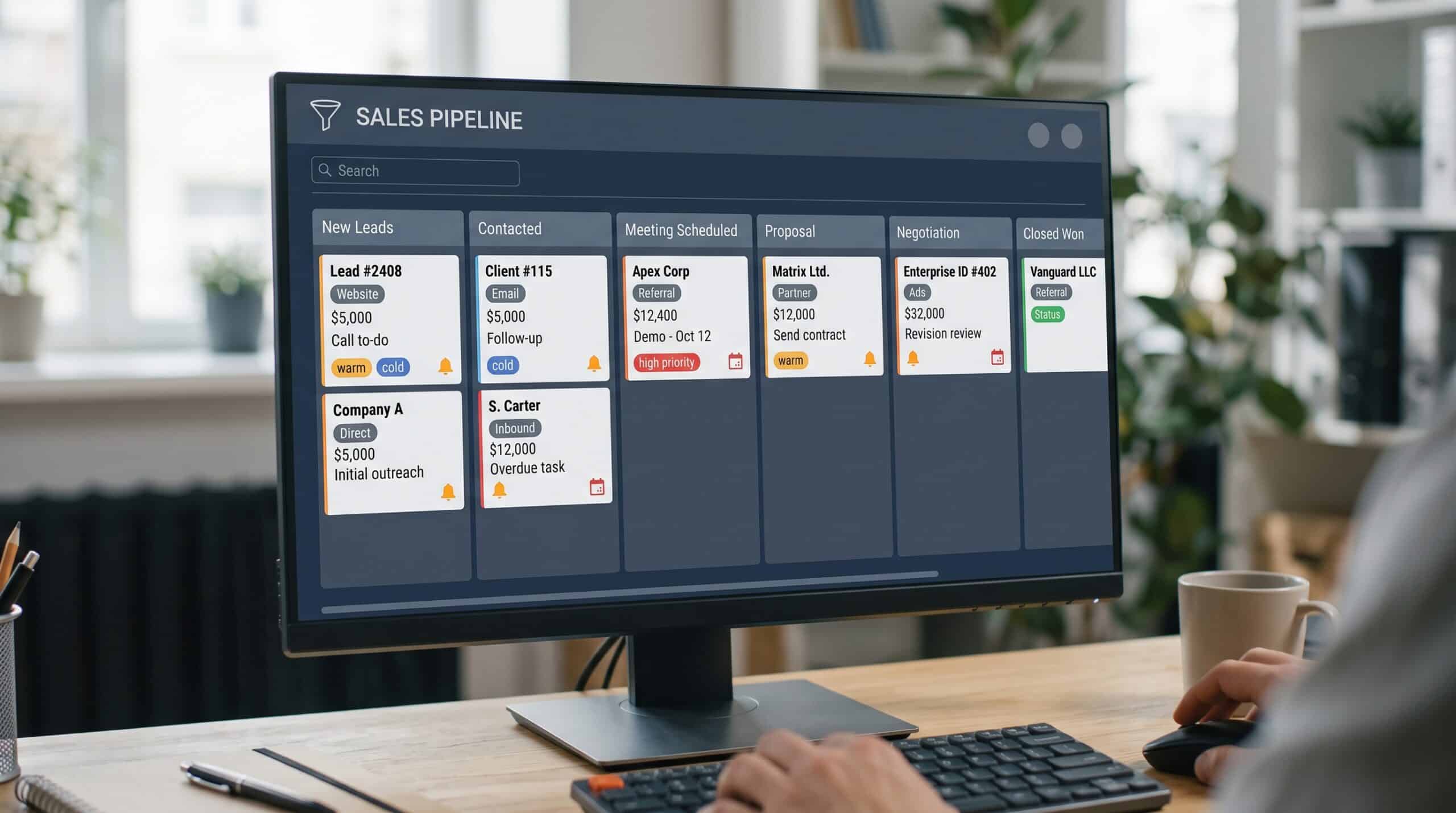
Instead of just being another location to enter data, a CRM should serve as the common record of customer inquiries, interactions, ownership, and sales outcomes.
Establish the essential fields
Start with a manageable set of fields:
- Lead ID: A unique identifier for each enquiry.
- Date received: When the business first received the enquiry.
- Source and campaign: Where the lead came from, when known.
- Service or product: What the customer is interested in.
- Assigned owner: Who is responsible for follow-up.
- Lead status: New, contacted, qualified, proposal sent, won or lost, as appropriate.
- Next action and due date: What must happen next and when.
- Outcome and value: Final result and associated revenue when confirmed.
Keep the process simple enough that the team can maintain it consistently.
Use consistent campaign tracking
Campaign tags and UTM parameters can help identify traffic sources and campaigns in analytics reports.
For example, a business sharing a service page through an organic LinkedIn post could use campaign parameters to distinguish that visit from paid advertising or email traffic.
These parameters need consistent naming conventions. A campaign labelled “October LinkedIn,” “LinkedIn Oct” and “LI October” across different systems may be difficult to compare reliably.
UTM parameters also have limitations. They can be lost or unavailable in some customer journeys, and they do not automatically connect a visitor to a CRM record or confirmed sale. The business needs a suitable integration and a clear process for matching records.
Define ownership and follow-up
Every open lead should have a clear next step and a responsible person.
A simple workflow could be:
- A new enquiry enters the CRM.
- The system assigns an owner or routes it to the appropriate team.
- The owner reviews and contacts the lead.
- The CRM records the outcome and next action.
- Unresolved enquiries are flagged for follow-up.
- The sales result is updated when known.
The business can then distinguish between a lack of lead generation and a failure to follow up.
Measure the KPIs That Matter
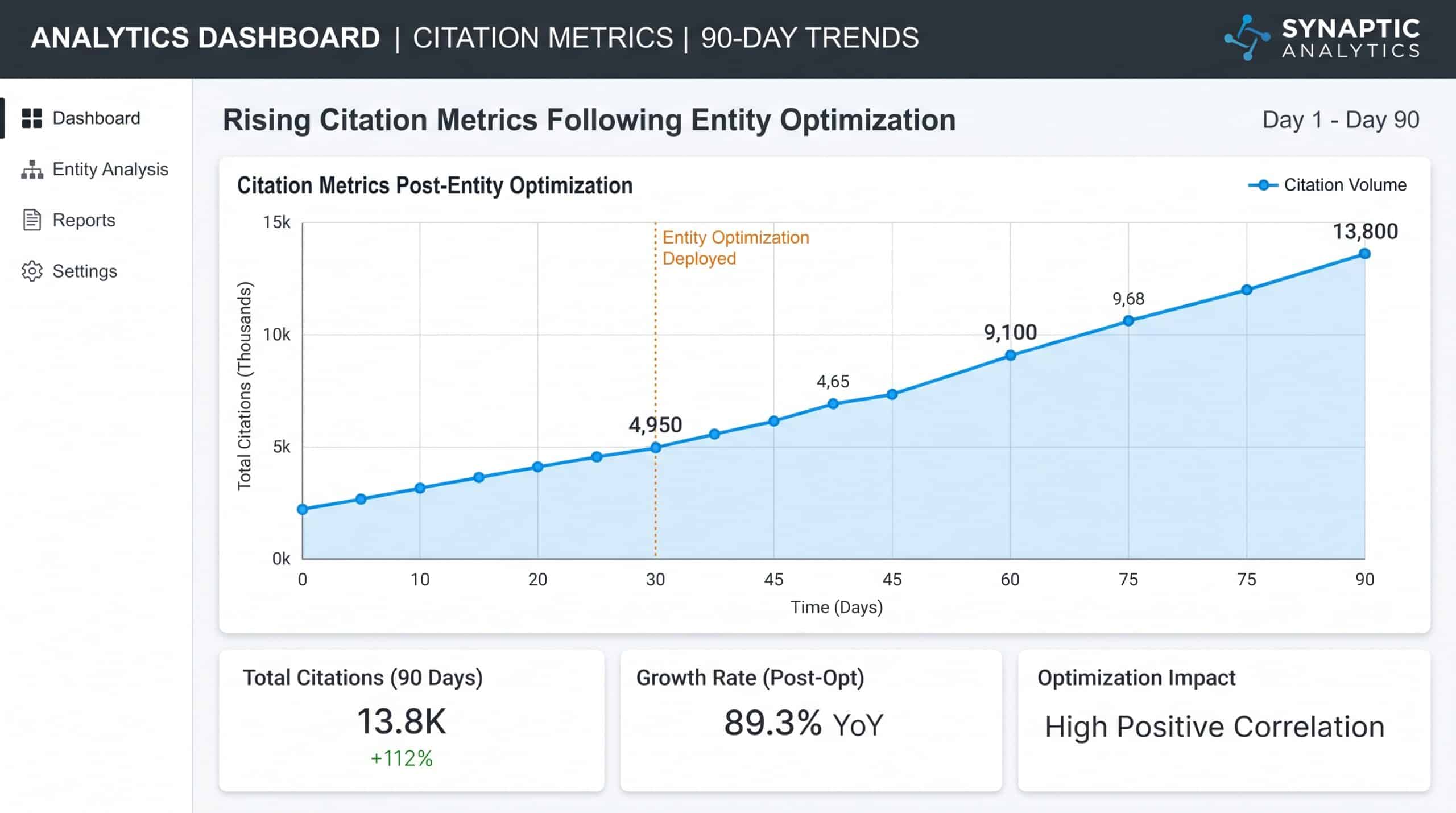
The right metrics depend on the business model, sales cycle, and quality of the available data. Start with a small dashboard that answers specific management questions.
Lead conversion rate
Lead conversion can mean different things, so define the numerator and denominator before comparing results.
For example:
Lead-to-customer conversion rate
Number of leads that become customers ÷ number of leads in the defined cohort × 100.
If 100 leads from a defined period eventually produce five customers, the observed conversion rate for that cohort is 5%.
Do not automatically divide this month’s customers by this month’s leads if the sales cycle spans multiple months. Match the cohorts or reporting windows appropriately.
Cost per lead
By dividing the appropriate marketing expense by the quantity of leads produced over the same reporting period, one may get the cost per lead.
A low cost per lead is not necessarily good. If those leads are unsuitable or rarely become customers, the business may be paying less for enquiries but more for each actual sale.
Customer acquisition cost
Customer acquisition cost (CAC) estimates how much the business spends to acquire a new customer.
A simplified calculation is:
Customer acquisition cost = acquisition costs ÷ new customers acquired
Decide whether the calculation includes advertising only or also agency fees, marketing labour, sales costs, and other relevant expenses. State the scope so that comparisons remain meaningful.
Revenue by source
Track the revenue associated with leads from different channels where the records support that connection.
Compare organic search, paid campaigns, referrals, email, and other channels over an appropriate period. Consider deal size, sales-cycle length, and customer quality rather than choosing a channel based on a single month’s totals.
Return on marketing investment
Although it is straightforward to compute, profit-based ROI differs from a basic revenue-to-marketing-spend ratio.
A more informative profit-based measure is:
Marketing ROI = (attributable incremental gross profit − marketing investment) ÷ marketing investment × 100
This calculation requires a defensible estimate of incremental gross profit attributable to the marketing activity. Attribution is imperfect, and the result depends on which costs and outcomes are included.
The objective is consistent, transparent measurement-not a falsely precise number.
Use Automation to Close Follow-Up Gaps
Once the business has reliable data and clear processes, automation can reduce repetitive work and help teams act on information sooner.
Useful examples include:
- Sending an acknowledgement when a form is submitted.
- Assigning enquiries according to service or territory.
- Reminding owners about overdue follow-ups.
- Updating dashboards when CRM statuses change.
- Flagging missing source, owner, or outcome fields.
- Sending managers a summary of leads, sales and unresolved opportunities.
Automation should support a defined process. It cannot fix inaccurate CRM entries, unclear ownership, or inconsistent sales stages by itself.
Where AI can help
AI techniques can be utilized to identify unusual performance changes, categorize unstructured feedback, summarize inquiry trends, or generate an initial draft of a management summary.
However, it is important to verify AI-generated findings against the underlying data. Misleading recommendations may arise due to missing information, duplicate contacts, or inaccurate status updates.
When handling customer information, it is essential to adhere to access controls, the company’s data policies, and any relevant privacy regulations.
Turn Reports Into Better Business Decisions

A useful dashboard should lead to a decision, not just present numbers.
Review performance regularly and ask:
- Which channels generate qualified opportunities?
- Where do enquiries stop progressing?
- How long does follow-up take?
- Which services generate profitable business?
- What data is missing or unreliable?
- What should the team change next?
Suppose a campaign generates many enquiries but few qualified opportunities. The next step may be to review the offer, targeting, landing page, or lead qualification criteria.
If the enquiries are suitable but many remain untouched, improving ownership and follow-up may be more valuable than increasing the advertising budget.
If customers convert but profit remains weak, examine service delivery costs, pricing, discounts and acquisition expenses before scaling the campaign.
Change one or two clearly defined factors where practical, record the change and review the outcome. This makes it easier to learn what works instead of repeatedly changing the entire marketing plan.
A practical 30-day starting plan
Week 1 – Audit: List the marketing channels, enquiry sources, CRM fields and reports currently in use.
Week 2 – Standardize: Agree on lead statuses, source labels, qualification criteria, owners and follow-up expectations.
Week 3 – Connect: Configure campaign tracking and connect the relevant analytics, enquiry and CRM records where feasible. Test the data flow before relying on it.
Week 4 – Review: Produce a simple dashboard, investigate missing records and choose one improvement based on the evidence.
Thirty days is a starting point for establishing the process, not a guarantee of a particular revenue increase. Longer sales cycles require longer observation periods.
Frequently Asked Questions
How can a small business measure marketing ROI?
Start by recording marketing costs, enquiries, qualified opportunities, new customers, and revenue. Use consistent definitions and connect outcomes to marketing sources where possible. For profit-based ROI, include the relevant gross profit and marketing investment rather than relying on revenue alone.
Which marketing KPIs should an SMB track first?
Start with qualified leads, lead-to-customer conversion, cost per lead, customer acquisition cost, and revenue by source where the data is reliable. Add other metrics when they help answer a specific business question.
Can a CRM show which marketing campaign generated a sale?
When lead source data is consistently collected and linked to the relevant sales record, a CRM can prove to be useful. Customers who use multiple devices, interact with various channels, or enter through untracked sources may achieve incomplete results. Is website traffic a reliable measure of marketing success?
Traffic helps measure discovery, but it does not prove commercial impact. Review it alongside relevant enquiries, qualified opportunities, sales and revenue.
Can AI automate marketing reporting?
AI can help summarize data, categorize information and prepare reports. Reliable source data, clear metric definitions, appropriate permissions and human verification remain essential.
How often should a business review marketing performance?
Many SMBs benefit from a brief weekly review of enquiries and follow-ups and a monthly review of marketing and sales outcomes. The appropriate schedule depends on lead volume and the length of the sales cycle.
What if the business cannot identify where its leads came from?
Begin recording the source when a lead enters the CRM, using consistent campaign tracking where possible. Mark unknown sources honestly rather than guessing. Improve the process over time and report the proportion of leads with unknown sources.
Does marketing attribution prove that a campaign caused a sale?
No. Attribution assigns credit according to a defined model and available data. It can help describe the customer journey, but it does not always establish causation or show what would have happened without the campaign.
Resources and References
BigBrainWay Resources
- BigBrainWay – Business growth, AI and digital solutions.
- Services for Small and Medium-Sized Businesses – CRM automation, lead funnels, analytics dashboards and AI integration.
- Business Automation and AI Solutions – Automation opportunities for business operations.
- Web Pages and Funnels – Website and conversion-focused solutions.
- BigBrainWay Blog – Further business growth and technology insights.
- Contact BigBrainWay – Enquiries about BBW’s services.
Internal References
- BigBrainWay homepage
Placement: Introduction or conclusion.
Anchor text: BigBrainWay’s business growth and AI solutions
- Services for small and medium-sized businesses
Placement: Section 5, “Use Automation to Close Follow-Up Gaps,” or the final CTA.
Anchor text: AI, CRM automation and measurable growth services for SMBs
https://bigbrainway.com/bbw-services-for-smbs/
Relevance: BBW describes CRM automation, lead funnel architecture, custom analytics dashboards, and AI tool integration on this page.
Big Brain Way AI Services
- Business automation and AI solutions
Placement: Section 5, “Use Automation to Close Follow-Up Gaps.”
Anchor text: business automation and AI solutions
https://bigbrainway.com/ai-automation/
Relevance: Connects the article’s discussion of reducing manual reporting and follow-up work to BBW’s automation offering.
- Web pages and funnels
Placement: Section 2, “Connect Marketing Activity to the Customer Journey.”
Anchor text: website landing pages and conversion funnels
https://bigbrainway.com/web-pages-funnels/
Relevance: Supports discussion of converting website visitors into identifiable enquiries and sales opportunities.
- BBW blog
Placement: End of the article, under “Related Reading.”
Anchor text: explore more BigBrainWay business growth and automation insights
https://bigbrainway.com/bbw-blog/
- Contact BigBrainWay
Placement: Final CTA.
Anchor text: contact BigBrainWay to discuss your lead tracking and reporting process
External References
- Google Analytics Help. About key events. https://support.google.com/analytics/answer/9267568?hl=en
- Google Analytics Help. Conversions vs. key events in Google Analytics. https://support.google.com/analytics/answer/13965727?hl=en
- Google Search Console Help. Performance report: Overview and basic setup. https://support.google.com/webmasters/answer/7576553?hl=en
- Google for Developers. Measure conversions and key events. https://developers.google.com/tag-platform/devguides/conversions
These materials describe tracking significant client activities and measuring website performance. The tools, integrations, and tracking configurations that each company implements will determine the data that is available.
Conclusion: Measure What Moves the Business Forward
Marketing reports are most useful when they help business owners understand what is generating meaningful opportunities, where customers are being lost, and which changes deserve attention.
The foundation is straightforward: consistent lead records, clear ownership, reliable tracking, appropriate KPIs, and a repeatable review process.
Once these foundations are in place, CRM integration, automation, and AI-assisted reporting can help reduce manual work and make the results easier to act on.
For Toronto SMBs, the goal is not to build the most complicated dashboard or chase every available metric. It is to create a dependable connection between marketing investment, customer relationships, and business outcomes.
BigBrainWay helps businesses build the digital foundations, connected workflows and measurable growth systems needed to move from scattered activity toward better-informed decisions.
Ready to understand where your digital presence and lead-tracking process can improve? Explore BigBrainWay’s services and start with a practical assessment of your current setup.
Call to Action (CTA)
Ready to Turn Marketing Data into Business Growth?
Your marketing reports should do more than count clicks and website visits. They should help you understand where leads come from, which activities generate customers, and where your next growth opportunity lies.
BigBrainWay helps small and medium-sized businesses connect digital marketing, CRM systems, AI-powered automation, and performance tracking to make smarter, data-informed decisions.
Call to action: Explore BigBrainWay services or contact the BBW team.
0 Comments