
Executive Summary
While voice assistants, AI-generated responses, and map-based discovery will be the main trends in 2026, the majority of local businesses are still optimizing for Google results.
This manual describes how small and medium-sized enterprises can:
- Become the AI tools’ default response
- Increase lead generation with automation and intelligent workflows
- Create a digital foundation based on data that grows over time.
You are on your way to being invisible if your company is not set up for AI search.
Purpose & Scope
This blog is intended for:
- Local companies in Toronto and the surrounding areas
- Owners of SMBs investigating AI but not sure where to begin
- Businesses having trouble with leads, visibility, or antiquated systems
It is more concerned with scalable, real-world systems than with theory.
Introduction: The Shift Nobody Talks About
Search in 2026 is no longer about websites competing for clicks.
It is about AI choosing who gets shown, spoken, and trusted.
When someone asks:
- “Best physiotherapist near me open today”
- “Who can fix my HVAC system right now”
- “Top-rated clinic in Scarborough”
They are not scrolling through 10 blue links anymore.
They are getting one answer.
And that answer is pulled from:
- Google Maps signals
- Structured content
- Reviews and engagement
- AI-readable data
Most businesses are still optimizing for search engines.
Very few are optimizing for:
- AI assistants
- Voice queries
- Conversational intent
- Geo-driven discovery
That gap is your opportunity.
This guide shows how local businesses in Toronto and beyond can build an AI-ready digital system that:
- Gets found across search, voice, and maps
- Converts attention into real leads
- Uses automation to scale without extra staff
If your business is not structured for AI search, it is not competing in 2026. It is waiting to be replaced.
What Changed in Search in 2026
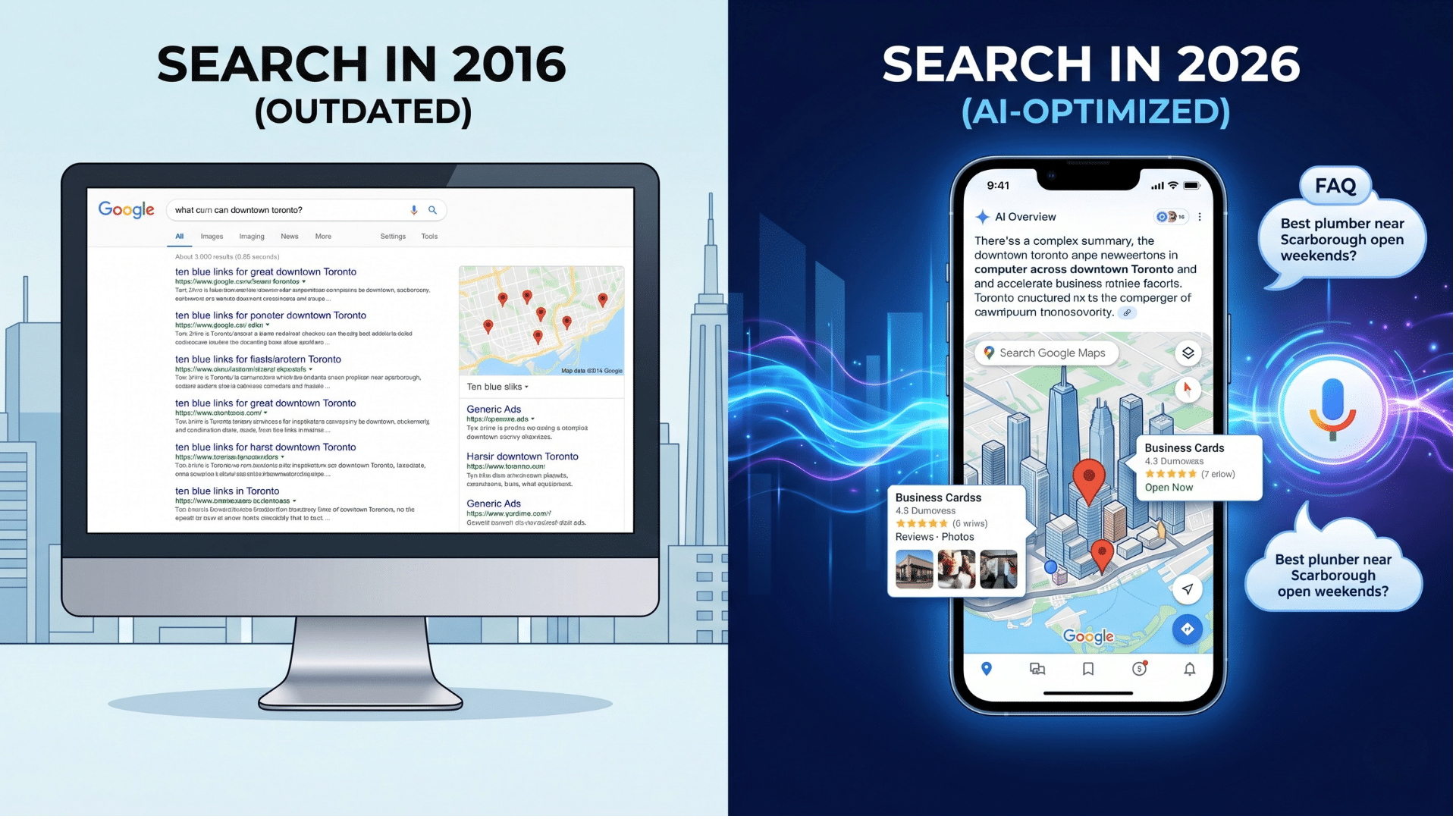
Key Shifts
- AI Overviews Replace Traditional Listings
Users get summarized answers instantly.
- Voice Search is Conversational
Example:
Old: “plumber Toronto”
New: “Who’s the best plumber near me open now with good reviews?” - Maps = Decision Engine
Most local purchases happen after a Maps interaction.
The New Ranking Stack (2026)
You Need All 6 Layers:
- SEO (Search Engine Optimization)
- VSO (Vector Search Optimization)
- GEO (Geographic Relevance)
- AIO (AI Optimization)
- RAG (Retrieval-Augmented Content)
- EEAT (Experience, Expertise, Authority, Trust)
If one is missing, performance drops significantly.
Why Most Local Businesses Are Falling Behind
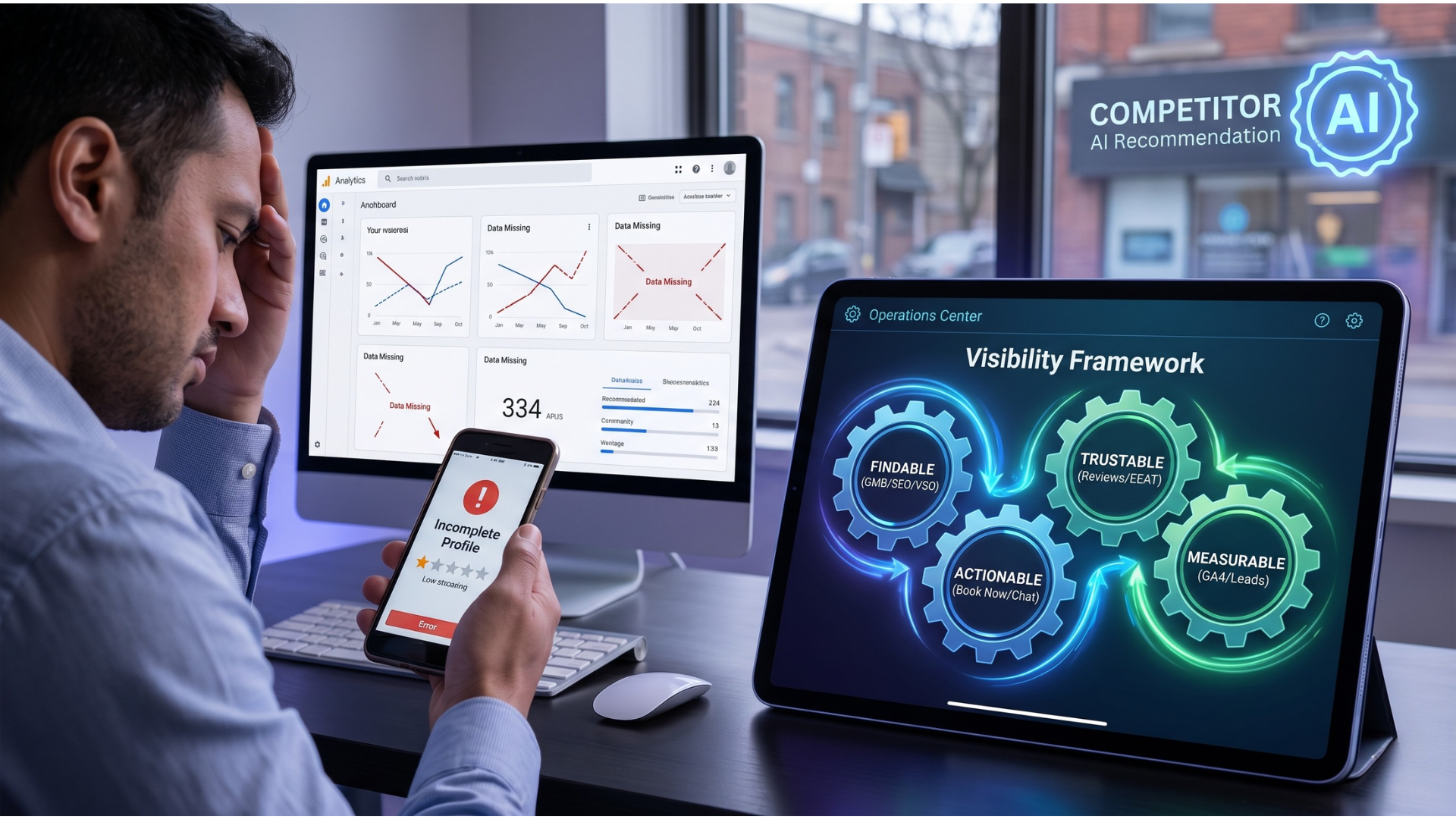
Common Gaps
- No structured content for AI
- Incomplete Google Business Profiles
- Slow or outdated websites
- No automation for leads
- No data tracking
These gaps break the chain:
Findable → Trustable → Actionable → Measurable
The AI Visibility Framework
- Findable
- Optimized Google Business Profile
- Structured website content
- Local keywords + conversational queries
- Trustable
- Reviews (10+ minimum)
- Consistent branding
- Updated content
- Actionable
- Clear CTAs
- Booking systems
- Fast response time
- Measurable
- Analytics (GA4)
- Lead tracking
- Conversion insights
Voice Search Optimization (VSO)
What Works in 2026
- FAQ-based content
- Natural language phrases
- Location-based intent
Example Optimization
Instead of:
“Best dentist Toronto”
Use:
“Who is the best dentist near Scarborough open on weekends?”
Google Maps as a Sales Engine
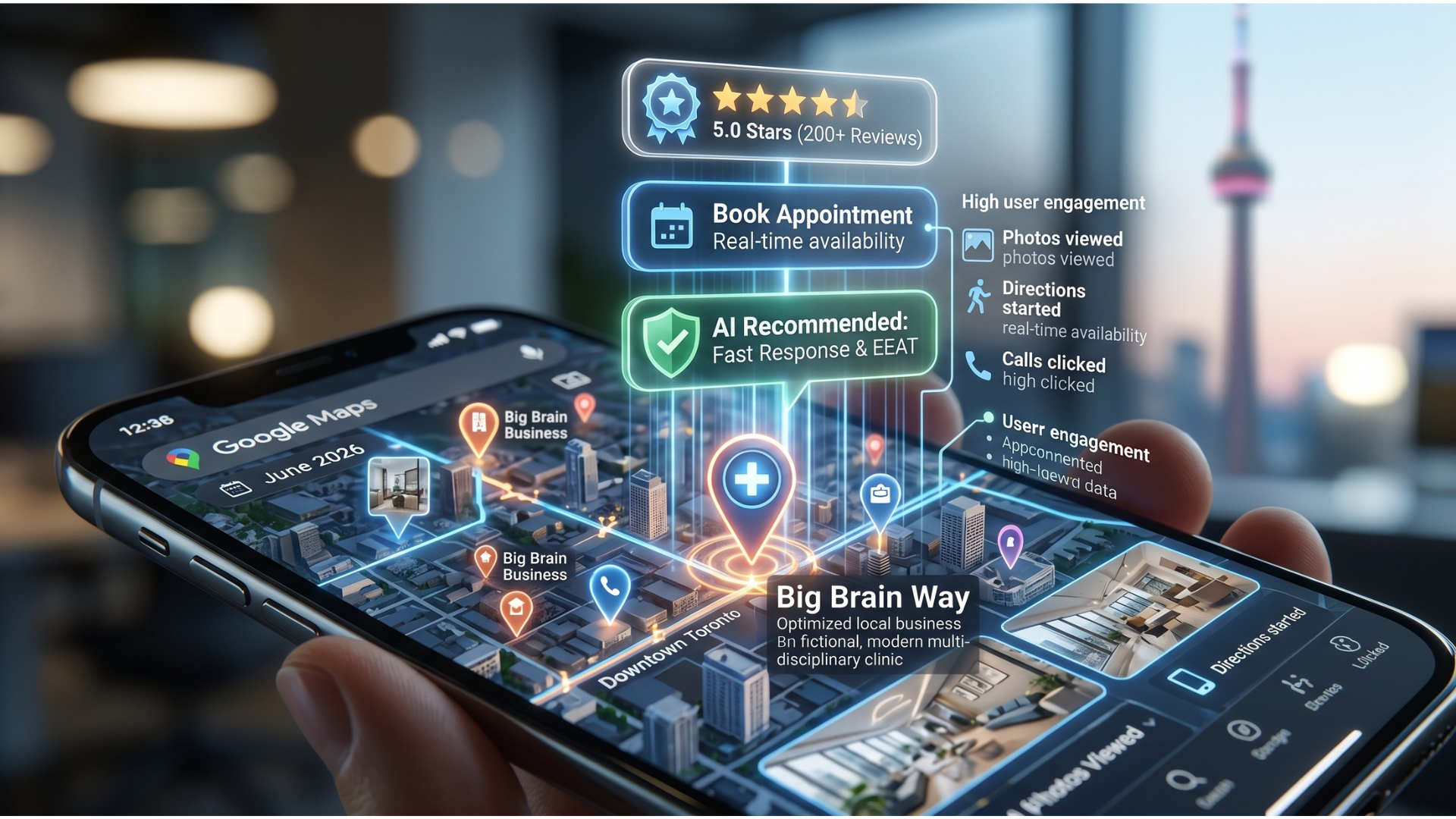
Why It Matters
- 46% of searches have local intent
- Users trust Maps more than websites
What Drives Rankings
- Reviews and responses
- Accurate business info
- Photos and updates
- User engagement
Automation: The Real Competitive Advantage
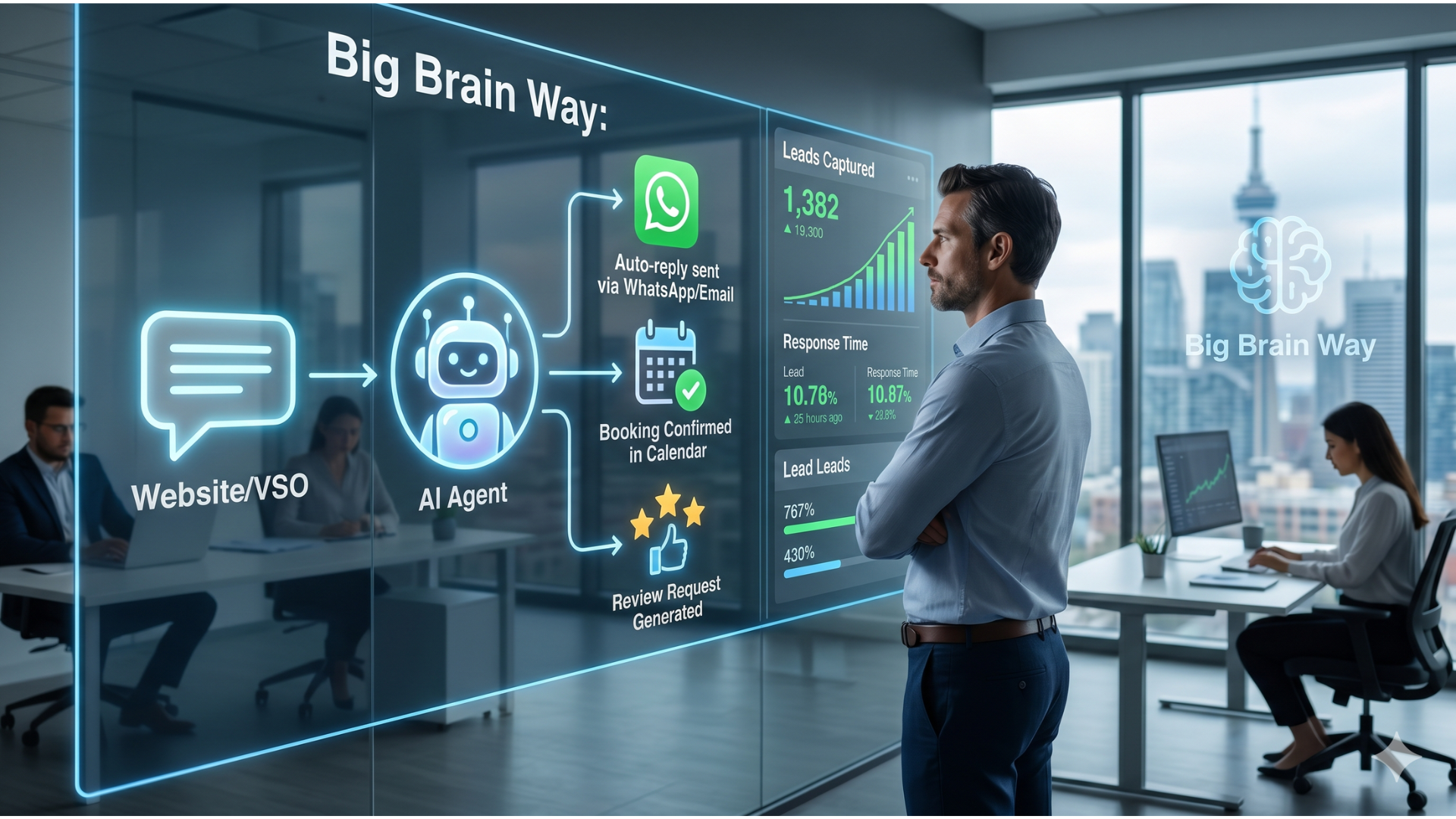
What Winning Businesses Are Doing
- Auto-reply to inquiries
- Booking systems
- AI chat assistants
- Review generation systems
Result
- Faster response times
- More captured leads
- Reduced manual workload
EEAT in the AI Era
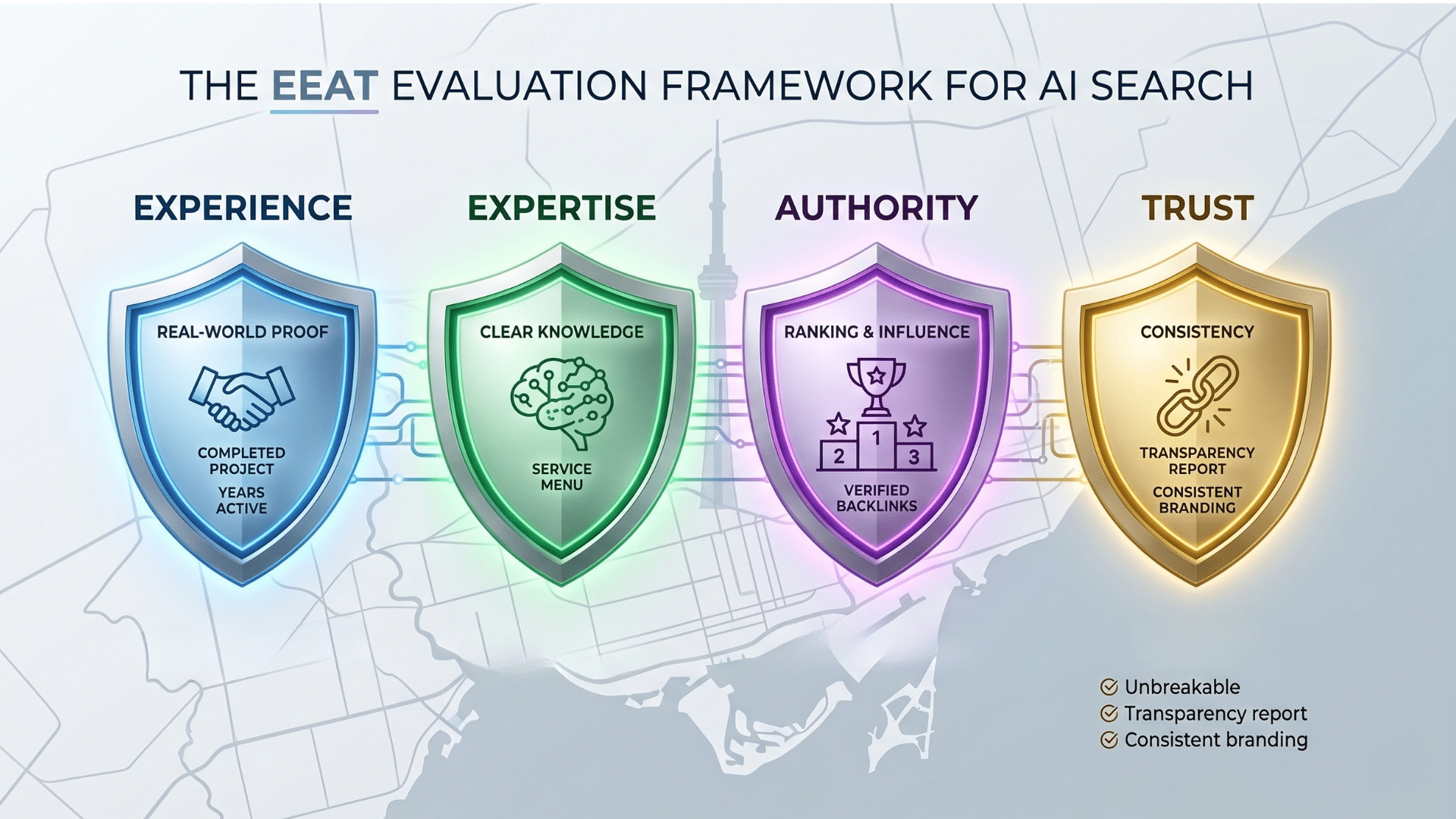
How AI Evaluates Businesses
- Experience: Real-world proof
- Expertise: Clear service knowledge
- Authority: Reviews, backlinks
- Trust: Consistency and transparency
Real-World Implementation Path

Step 1: Fix Your Foundation
- Website
- Google profile
- Branding
Step 2: Add Visibility
- SEO + VSO content
- Local optimization
Step 3: Capture Leads
- Forms
- Booking
- Auto-replies
Step 4: Automate & Scale
- AI agents
- Dashboards
- Reporting
FAQs
- What is AI Search Optimization in 2026?
AI search optimization ensures your business is selected by AI tools like chat assistants, voice search, and search summaries. It focuses on structured data, trust signals, and conversational content rather than just keywords. - How is VSO different from traditional SEO?
Traditional SEO targets keywords.
VSO (Vector Search Optimization) focuses on meaning, context, and relationships between topics so AI systems can understand and retrieve your content accurately. - Why is Google Maps more important than websites now?
Because most local decisions happen directly on Maps:
- Users check reviews
- View photos
- Call or navigate instantly
- Your website supports trust, but Maps drives action.
- How do AI assistants choose businesses?
They prioritize:
- High ratings and reviews
- Complete and accurate profiles
- Fast, structured websites
- Consistent data across platforms
- What are the fastest wins for local businesses?
- Fix Google Business Profile
- Add 10+ real reviews
- Improve website speed
- Add booking or contact forms
- Enable auto-response systems
- Do small businesses really need AI?
Yes. It reduces workload and improves lead capture immediately.
- Do I need AI tools to compete?
- Not initially. But automation becomes critical as you scale:
- Missed calls = lost revenue
- Slow replies = lost trust
- AI fixes both instantly.
- How long before results show?
- 7-14 days: Visibility improvements
- 30-60 days: Traffic and engagement
- 90+ days: Compounding growth
- What industries benefit the most?
- Clinics (physio, dental, wellness)
- Contractors and trades
- Restaurants and cafes
- Local services
- What is EEAT and why does it matter?
- EEAT stands for:
- Experience
- Expertise
- Authority
- Trust
- AI systems use these signals to decide if your business is credible enough to recommend.
- What happens if I ignore AI search?
- You will:
- Lose visibility
- Miss leads
- Fall behind competitors
- Even if your business is better.
Conclusion
The biggest shift in 2026 is not technology.
- It is selection.
AI systems are deciding:
- Which businesses get recommended
- Which ones get ignored
- Which ones dominate local markets
And they are doing it based on:
- Structure
- Data
- Trust signals
- Response speed
- Most businesses are still trying to “rank.”
The ones winning are building systems that make them:
- Easy to find
- Easy to trust
- Easy to choose
This is no longer about marketing.
- It is about building a machine that captures demand automatically.
If your business:
- Misses calls
- Has inconsistent online presence
- Relies on manual processes
Then you are not competing with better businesses.
- You are competing with better systems.
And systems win every time.
We will show you:
- Where you are losing leads
- What quick wins you can implement
- How to become the default answer in your market
Resources & References
Internal Links
External Links
- Google Search Central Documentation
https://blueglassinsights.com/article/google-search-central-complete-guide-seo-documentation
https://developers.google.com/search/updates
https://alexakhilova.com/google-search-central-documentation-for-seo-specialists-useful-links/ - OpenAI Search Behavior Studies
https://www.searchenginejournal.com/what-openai-research-reveals-about-future-of-search/556725/
https://www.researchgate.net/publication/385949773_A_Study_on_Information_Search_Behavior_Using_AI-Powered_Engines_Evidence_From_Chatbots_on_Online_Shopping_Platforms
https://dl.acm.org/doi/full/10.1145/3706599.3720123 - Local SEO Industry Benchmarks
https://databox.com/seo-industry-benchmarks
https://www.rankmax.com.au/articles/local-seo-statistics
https://ahrefs.com/blog/seo-statistics
Final Insight
AI is not replacing search.
It is replacing who gets chosen.
0 Comments