
Executive Summary
Traditional SEO gets you ranked on Google’s ten blue links, but AI engines like Perplexity and ChatGPT operate on entity relationships. Toronto businesses missing structured schema and corroborating data vectors are entirely invisible to conversational search engines.
Purpose and Scope
This tactical brief outlines why established B2B and consumer brands in the Greater Toronto Area (GTA) are losing search market share to AI discovery engines. It details the structural transition from index-based search engine optimization (SEO) to vector-based Generative Engine Optimization (GEO).
Introduction
If a potential client asks ChatGPT, “Who are the top mid-market corporate law firms in Financial District Toronto?”, does your firm appear in the synthesized answer?
For most Toronto executives, the answer is no. You might hold position #1 on traditional Google SERPs for a legacy keyword, yet remain nonexistent in LLM responses. This gap is The Invisible Business Problem.
AI engines do not crawl links to rank pages, they query high-dimensional vector spaces to retrieve verified entity nodes. If your digital footprint lacks structured semantic relationships, conversational tools bypass your brand entirely.
Start with Assessment, Not Assumptions
Before allocating capital to ad spend or content production, audit your fundamental AI search visibility. Most agencies assume missing traffic stems from poor keyword coverage. In vector search, missing traffic stems from unindexed entity data.
Legacy SEO Fails in Vector Space
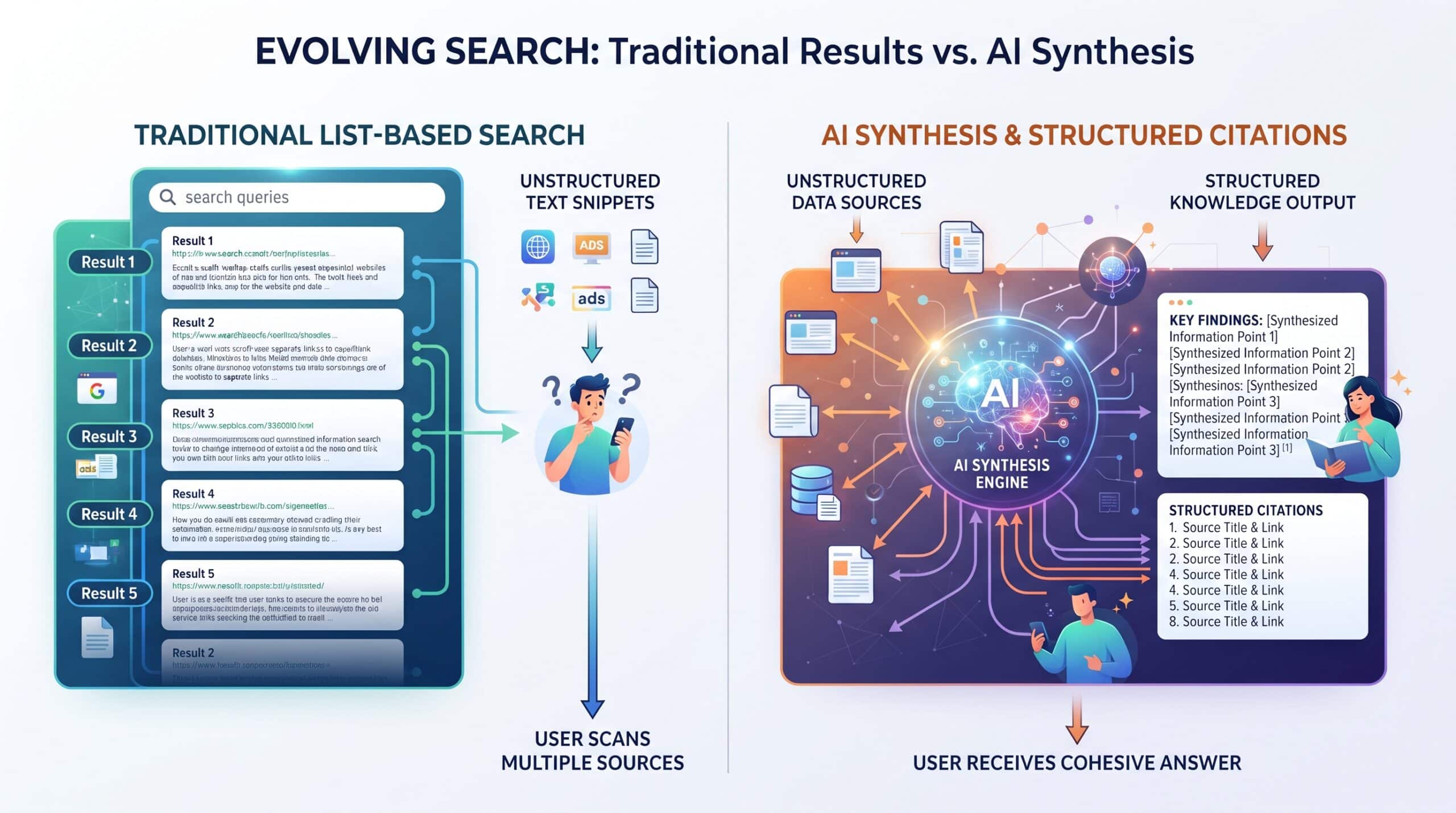
Legacy SEO strategies relied on repetition: target a keyword, build backlinks, and publish long-form text.
AI search models (Large Language Models utilizing RAG) process queries differently:
- Query Deconstruction: The user prompt is converted into a multidimensional vector embedding.
- Dense Retrieval: The model searches vector databases for nodes with high cosine similarity.
- Synthesized Generation: The top retrieved nodes are synthesized into a single text answer.
If your Toronto business exists only as unstructured text without clear JSON-LD schema linking your physical location (Toronto, ON, Canada), services, and authority signals, the model discards your node due to low probabilistic confidence.
The Big Brain Way GEO Protocol
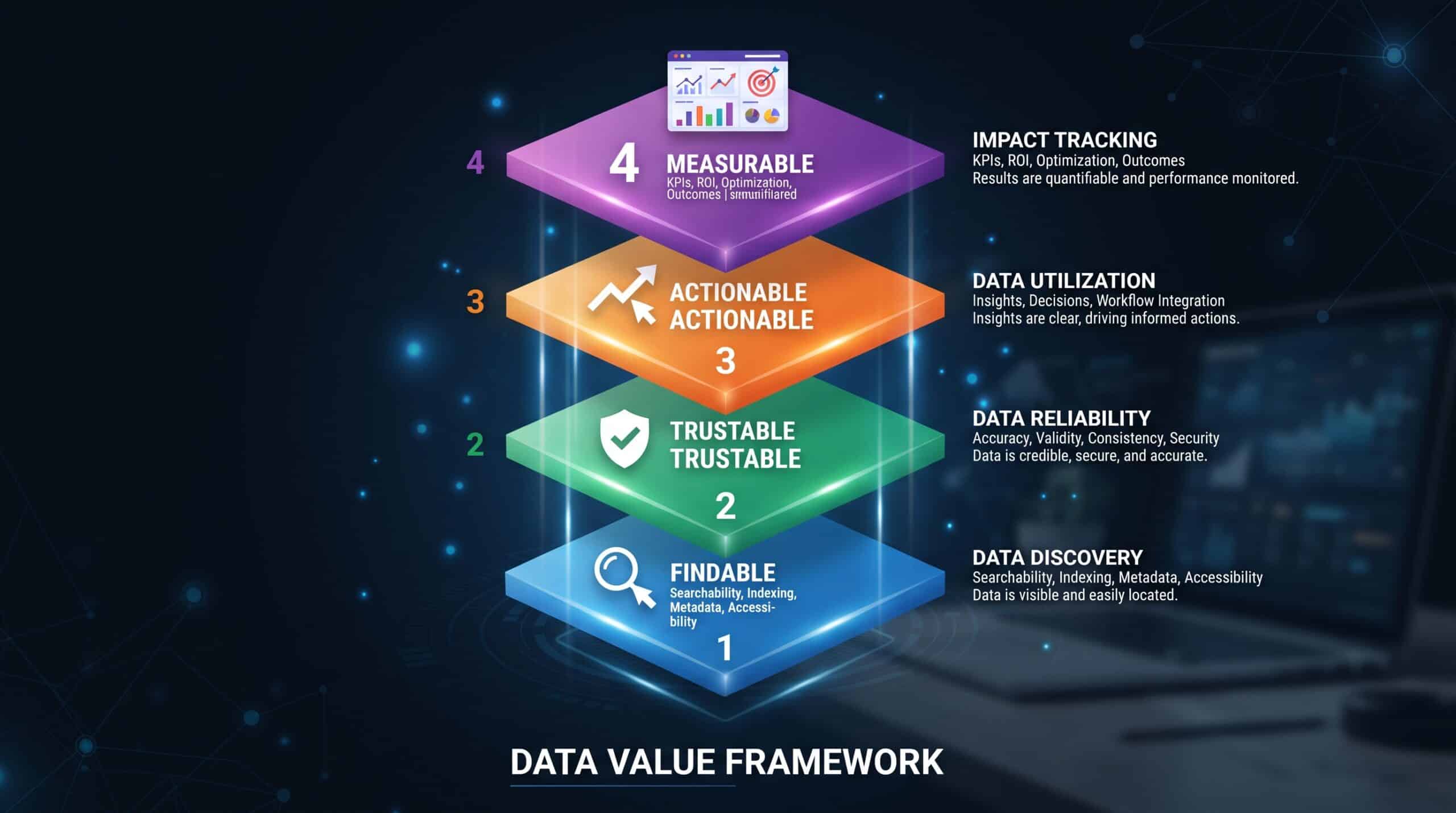
To achieve visibility across conversational search interfaces, companies must deploy Generative Engine Optimization (GEO) built on a structured 4-layer foundation.
The Big Brain Way Hierarchy
- Findable: Implement nested JSON-LD schema markup (Organization, LocalBusiness, PostalAddress) tied to Wikidata and Google Knowledge Graph IDs.
- Trustable: Establish corroborating citations across authoritative Canadian databases (e.g., Toronto Region Board of Trade, Industry Canada, leading regional publications).
- Actionable: Optimize on-page micro-copy and conversion points for conversational intent extraction.
- Measurable: Track LLM citation frequency, brand mention sentiment, and referral traffic within GA4 using custom regex parameters.
Measuring Entity Visibility Gains
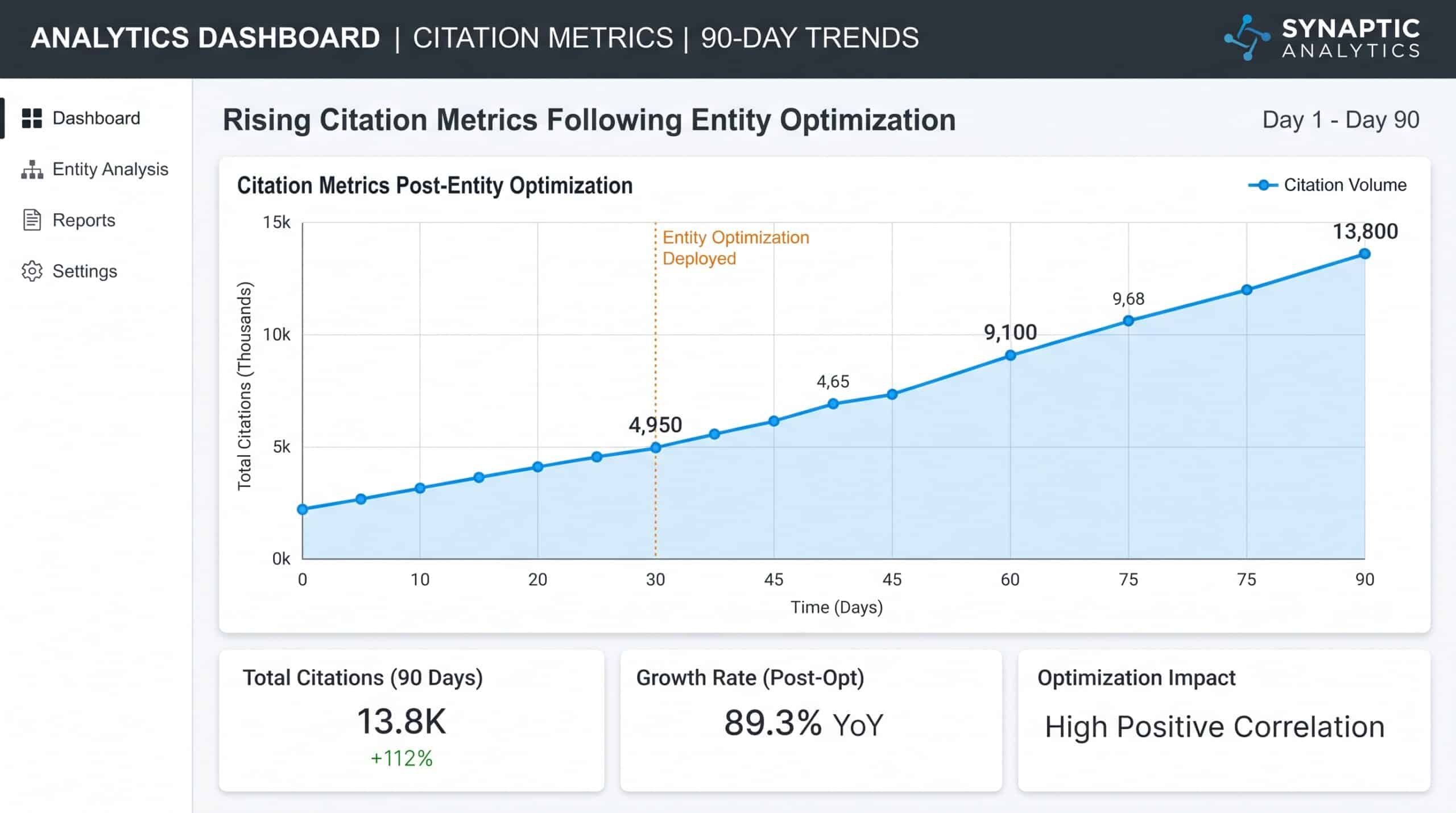
Data from client implementations demonstrates that aligning entity data with vector search protocols yields measurable increases in conversational citations.
ChatGPT Brand Mentions: Increased from a 0% citation rate to a 68% citation rate.
Perplexity Source Links: Improved from 1 unverified link to 14 verified citations.
Schema Validation Score: Advanced from 24% (with errors present) to a 100% validated entity graph.
Organic Direct Conversions: Grew from baseline to +42% inbound inquiries within 90 days.
Your 4-Step Vector Readiness Plan

Take these immediate actions to establish entity authority in Toronto’s local AI search ecosystem:
- Step 1: Deploy Organization & Local Schema
Add fully qualified JSON-LD script containing geo coordinates (latitude: 43.6532, longitude: -79.3832), physical address (Toronto, ON), and explicit sameAs entity links. - Step 2: Consolidate Entity Citations
Ensure exact match across Name, Address, Phone (NAP) and business details on Bloomberg, Crunchbase, and Canadian business registries. - Step 3: Structure Content into Direct Answer Blocks
Reformat core service pages using clear H2 query structures followed immediately by declarative 40-50 word answer paragraphs. - Step 4: Monitor LLM Referral Signatures
Configure referral filters in GA4 for perplexity.ai, chatgpt.com, and claude.ai traffic sources.
Why Choose the Big Brain Way?
At Big Brain Way, we do not guess at algorithm updates; we engineer content for vector space. Based in Ontario, we help Toronto businesses transform unstructured brand presence into machine-readable knowledge graphs that AI search engines trust, synthesize, and cite.
Frequently Asked Questions
- How is AI search optimization different from traditional local SEO in Toronto?
Traditional local SEO focuses on ranking in Google’s Map Pack and SERPs using keywords and local backlinks. AI search optimization (GEO) focuses on becoming a primary trusted data source in vector databases used by ChatGPT, Perplexity, and Gemini to generate direct conversational answers. - Why isn’t my Toronto business showing up in ChatGPT or Perplexity results?
AI models retrieve information based on entity confidence scores. If your business lacks clear JSON-LD schema, consistent cross-platform corroboration, and clear answer-block formatting, AI systems treat your company as unverified and exclude it from synthesized answers. - Does rank tracking work for AI search?
Legacy rank trackers that monitor static keyword positions do not accurately capture conversational search. AI search tracking requires monitoring entity citation frequency, source link placement, and prompt-based brand retrieval rates. - What schema types are most critical for Toronto business GEO?
The primary schema types required are Organization, LocalBusiness (or specific subtypes like LegalService or FinancialService), PostalAddress, GeoCoordinates, and sameAs array links connecting to verified external knowledge profiles. - How long does it take for AI search engines to index new structured data?
While traditional web crawlers index changes within days, AI models reflect updates when their RAG pipelines fetch updated web data or when base models refresh. Expect initial citation improvements within 30 to 60 days of schema deployment and entity consolidation. - Can smaller Toronto companies compete with national brands in AI search?
Yes. AI models prioritize entity precision and factual verification over domain authority alone. A local Toronto business with complete, structured, and corroborated entity data can easily beat a national brand with unstructured content. - What is Vector Search and why should a business owner care?
Vector search converts text into mathematical coordinates (embeddings) to understand semantic intent rather than exact keyword matches. Business owners must structure their digital presence so AI engines can easily calculate a high similarity score between user queries and the brand’s services.
Internal-Link Architecture
- Big Brain Way: https://bigbrainway.com/
- AI engines: https://bigbrainway.com/ai-automation/
- Vector search: https://bigbrainway.com/vector-search-optimization/
- Contact us: https://bigbrainway.com/bbw-services-for-smbs/
External Link Architecture
- Generative Engine Optimization (GEO): https://en.wikipedia.org/wiki/Generative_engine_optimization
Conclusion & Call to Action
The shift from keyword index searching to AI generative answers is the largest strategic shift in digital marketing in two decades. If your Toronto business relies on legacy SEO alone, you are growing invisible to your highest-intent buyers.
Fix your foundational layer today. Contact us to run a full Generative Engine Audit on your Toronto entity footprint.
0 Comments